On belonging.
It can take a lifetime to learn the word Home.
There’s a moment that many people—many re-patriates—long for. It’s a moment when you stop being a stranger and find yourself belonging, or at least feeling at home. It’s the moment when you stop feeling foreign or regarding everyone else as foreign. In sociological and anthropological language it’s when everyone stops being the Other.
If you’re English, it’s about getting over the teabags.
There comes a point, if you’re living a long way from where your feet first touched the ground, when either you get lucky and your heart quietly digs in, or you don’t get so lucky and you have to just get down from the fence. As my friend Maria says, we can have it all – just not all at the same time. Teabags or Times Square: take your pick.
I’ve done serious time in foreign territories and I know about missing things. I’ve missed my mother and my sisters, my library of books, a certain bitter orange marmalade, a long winding walk by a river in Derbyshire where my uncle could wave his magic wand and conjure a plate of cream cakes and a thermos of tea. Yes, it always seems to come back to the tea. For years I found creative ways to transport quantities of TyPhoo teabags in my suitcase from England to the West Indies. Eventually the fuss and the excess baggage got old. I moved to the States and built a family, watched my sons until they were grown and flown, and so many years later I was still missing the tea and the marmalade. I knew then that it was time to stop looking back and start looking forward.
So I jumped down from the fence and I bought a horse.
There are no doubt far less dramatic or expensive prods toward a change of perspective, but when I was faced with a 900 pound reason to dig in, to pick up a pitch fork and get my hands dirty, something deep inside me began to shift. Some roots were being tested.
But whose roots, exactly?
I moved to the United States just before Easter 1990, six months pregnant with my first son. Newport, Rhode Island was an easy place to land. After a decade of easy living on a tiny island in the West Indies, Newport was a friendly, manageable little metropolis laced with an international sensibility and a grassroots heart that welcomed me in. It wasn’t my first visit. My husband and I had been romanced by New England in the early ‘80s when we explored its white mountains and pristine villages, weathered shingle and clapboard buildings, and witnessed up close the fireworks of the America’s Cup changing hands.
Still, it took a long time for me to belong. I’d left behind a warm island community where I came of age as a woman, nurtured by rich and lasting friendships with women I was sharing journeys with—including the journey of becoming mothers together.
I’ve lived here for three decades now, raised two sons, taught in the local school, volunteered with civic and charity organizations, written for local publications, given readings of my travel stories and poetry around the state—and become a US citizen along the way. I’ve gained rich and lasting friendships.
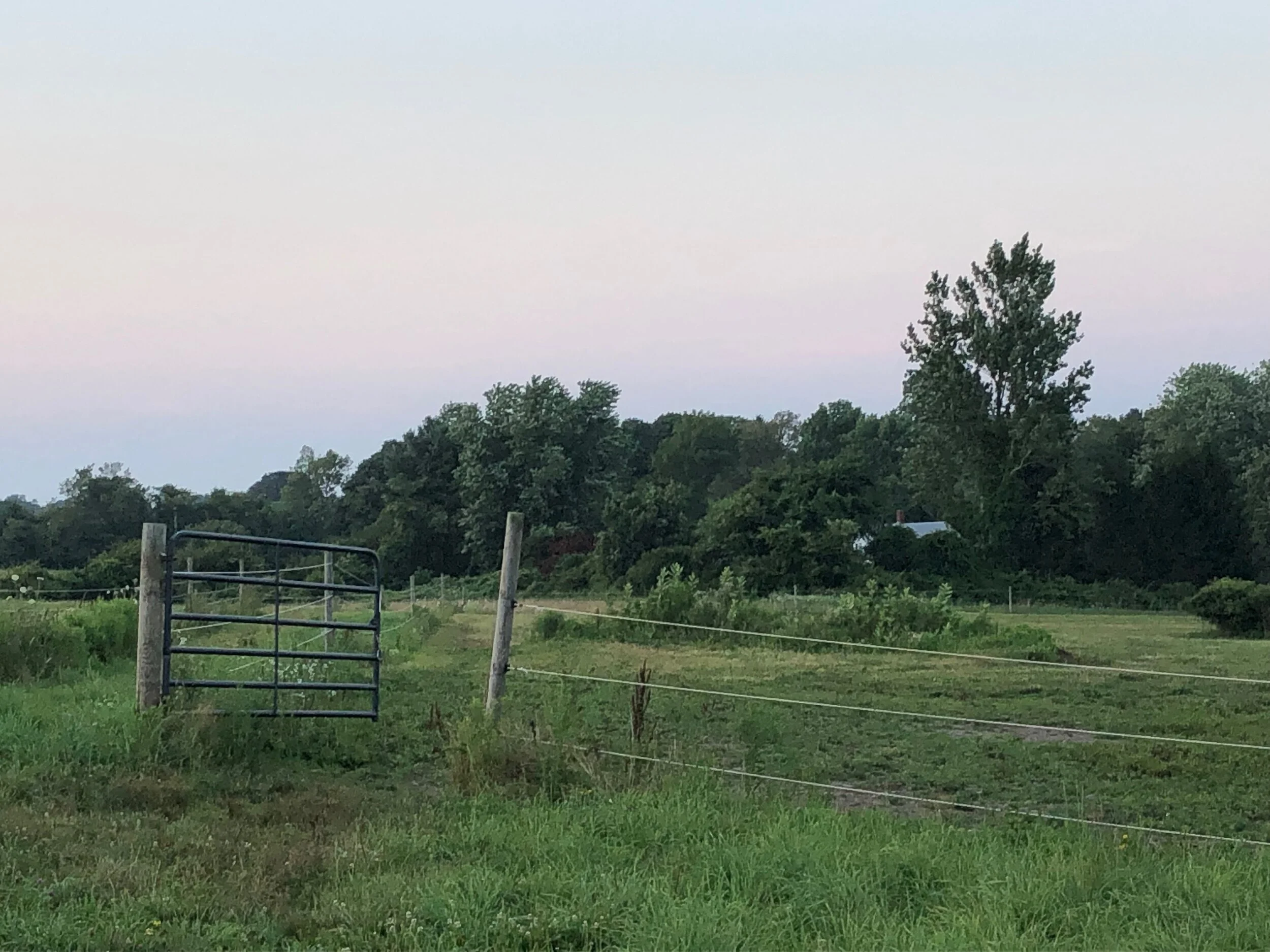
But it wasn’t until five years ago that I sensed I was sending out my own roots and no longer piggybacking on the roots that rightfully belong to my sons. It wasn’t until I committed to what was in front of me instead of what was behind me. I committed to digging in the dirt. I got face to face with where I was and what was necessary. And what was immediately necessary was mucking out horse stalls in the middle of winter, shoveling manure, getting my hands honestly dirty—and in the meantime wholly embracing the elements of a New England life.
I got grounded. I dug myself into this island and shifted some turf. Made it my own. It took patience, and some sweat. There were tears along the way too, born of loneliness, frustration, and the sort of questions I didn’t want to be asking myself at my age and after so much heart and soul investment. But I stuck with it and now it’s sticking to me. I’m building a home for myself. I’m starting to belong.